

Patient and family perspectives
Patient Experiences
Individual accounts of specialist care, treatment preparation, hospital communication, and complex neurological or neurosurgical pathways.
Experiences across different care pathways.
The videos and written accounts below describe individual experiences with clinical teams, hospital care, treatment preparation, and communication. They are presented to illustrate different patient journeys—not to predict outcomes. Where Healwise supports a case, its role is administrative preparation, coordination, and communication; clinical assessment and treatment decisions remain with licensed healthcare professionals.
Three patient journeys, told in their own words
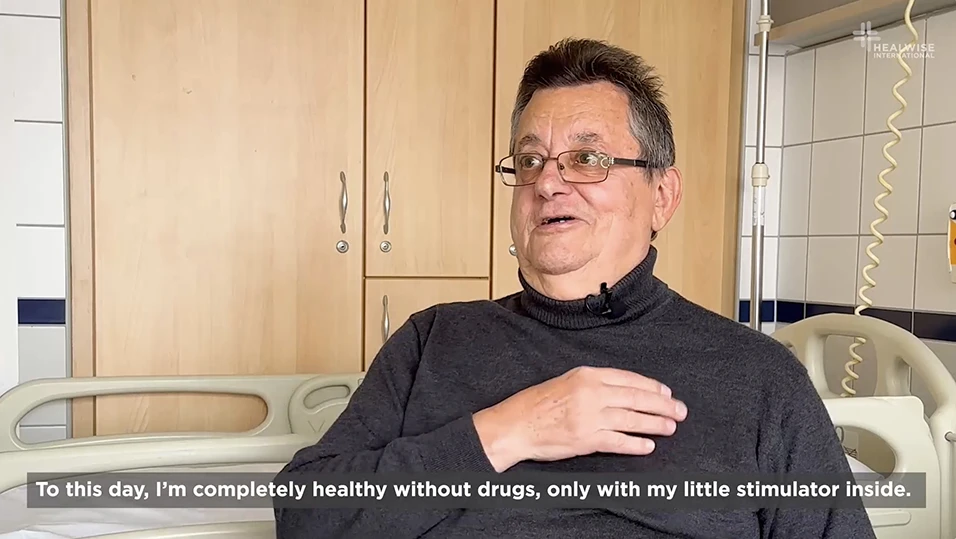
The Story of György 4:35
A patient living with Parkinson’s disease describes his experience of a functional neurosurgery pathway.
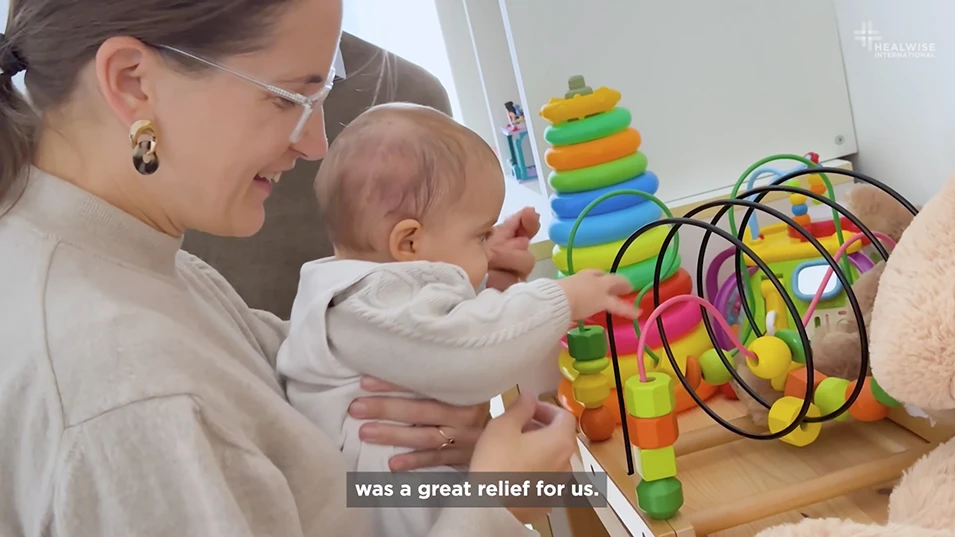
The Story of Bertalan 4:27
A family describes the care journey of a newborn diagnosed with a brain tumor.
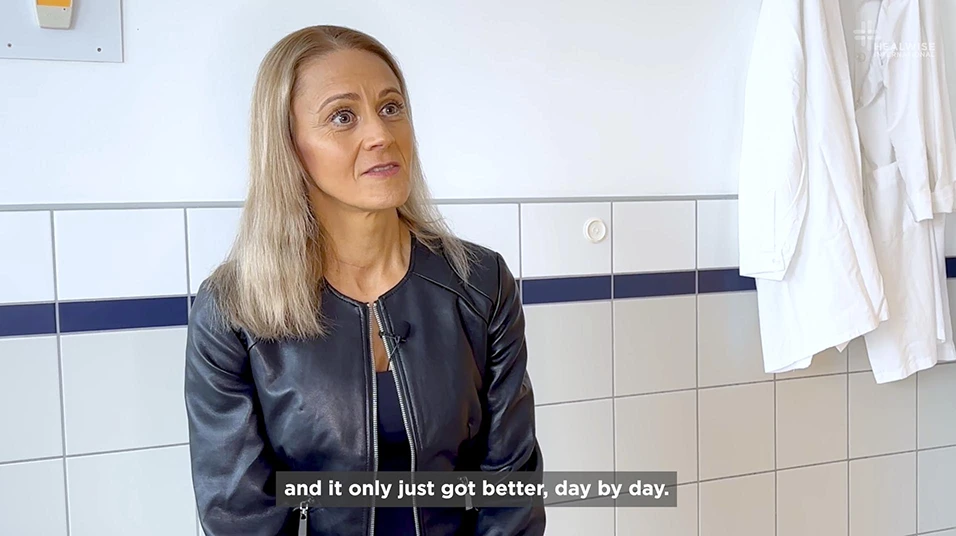
The Story of Diana 5:25
A patient describes her experience of a complex spine pathway involving spinal stenosis, disc herniation, and spondylolisthesis.
Public Google Reviews
The section below displays reviews published through Google. Reviews reflect individual experiences and may relate to coordination support, hospital services, or care delivered by clinical providers. Healwise does not edit the substance of third-party reviews.

Lorinczi Zoltan

Sunt din Romania și am ajuns cu un membru de familie la Clinica de Neurochirurgie Semmelweis aproape paralizat din cauza unei tumori pe coloana vertebrala. Datorita profesionalismului si a cunostintelor de inalta clasa a Profesorului Dr. Erőss Loránd după o operație de 6 ore a reusit sa pună pe picioare pe bunica noastră. Mii de mulțumiri atât pt.Dl. Profesor cât și pt. toată echipa,mai ales pt.Dl. Magyar Bence cine ne ținea la curent cu toate detaliile leagate de operație ,spitalizare ,postoperație și recuperare. Este un spital foarte bine dotat cu aparatura medicală de ultimă generație ,cu Profesori recunoscuti pe nivel European si deasemenea cu asistenti pregătiți și personal adecvat pt.acest nivel . Dumnezeul să vă binecuvinteze! Recomand cu drag și căldură această clinică. - 1 year ago
Read moreRead less

×
Lorinczi Zoltan
1 year ago
Sunt din Romania și am ajuns cu un membru de familie la Clinica de Neurochirurgie Semmelweis aproape paralizat din cauza unei tumori pe coloana vertebrala. Datorita profesionalismului si a cunostintelor de inalta clasa a Profesorului Dr. Erőss Loránd după o operație de 6 ore a reusit sa pună pe picioare pe bunica noastră. Mii de mulțumiri atât pt.Dl. Profesor cât și pt. toată echipa,mai ales pt.Dl. Magyar Bence cine ne ținea la curent cu toate detaliile leagate de operație ,spitalizare ,postoperație și recuperare. Este un spital foarte bine dotat cu aparatura medicală de ultimă generație ,cu Profesori recunoscuti pe nivel European si deasemenea cu asistenti pregătiți și personal adecvat pt.acest nivel . Dumnezeul să vă binecuvinteze! Recomand cu drag și căldură această clinică.

Dr Dov from Mcr UK
I am a 69 y.o. MD from Mcr, UK. Earlier this year, I sought options for spinal stenosis treatment at L3-L4 level, which caused increasing claudication, weakness & spasms in both buttocks & paresthesias down my left leg. Imaging revealed the dural sac was compressed from multiple directions — disc bulges, hypertrophic facet joints, thickened ligamentum flavum & bilateral foraminal narrowing + grade 1 spondylolisthesis.
After thorough consideration, I proceeded with minimally invasive lumbar decompression surgery in Budapest under Prof. Banczerowski. My decision was driven by the innovative surgical approach involving direct visualisation pioneered by the Prof. A fellow surgeon highly recommended him, and the more accessible timeframe & costs (vs uk) were a big factor. In an online consultation, prof. explained the procedure in very adequate English.
Professor operates through 2 ipsilateral small incisions, not 1. He inserts a thin scope through the smaller one for direct visualisation (instead of xray control) of the internal operative field. This makes a MASSIVE difference to the scope and outcomes of the procedure.
Direct visualisation enables professor to have full control over how much he removes & where he can safely reach, so he can create a much greater decompression of the dural sac and exiting nerves, at very low risk of damage to vulnerable tissues.
The 2nd, slightly wider incision is for the keyhole surgical tools & irrigation.
Other (Xray control) methods only show bone outline, not soft tissues. The surgeon has to go by feel as well as patient feedback ( under local anaesthesia) ie he cannot see the ligaments, dura mater, nerves & spinal cord tissues. Their expert hands can navigate these disadvantages and reach condition improvement, but the foraminae/ canals through which the nerves exit and the spinal canal are out of their reach because only direct visualisation can visualise vulnerable tissues.
Prof removed ALL the ligamentum on the left, & much of the contralateral one. He was able through that 1 sided incision, to do ipsilateral upper & lower laminotomies AS WELL AS smaller contralateral ones, creating a large space for the dural sac to get out of the way of the pressure from the bulging disc and to help prevent nipping by spondylolisthesis. He safely navigated around the dural sac to decompress the ipsilateral and contralateral foraminae, assessed if thr disc required removal (which could be done at the same time - albeit via a more extensive, vertebral fusion operation - thankfully mine did not need it).
This technique requires a G.A. and takes 2.5 to 3 hours as compared to keyhole ops. done under local that take ~ 30 to 60 mns.
Yes, the recovery is slower, requiring 2 or 3 nights in hospital and a few weeks of gradual rehabilitation, but the clinical benefit is likely greater and more durable, due to the greater decompression.
Within a couple of days, I was speeding around town on foot with no significant pain, just a slightly stiff back from the small incision.
I highly recommend Professor and his expert team of friendly anaesthetists, surgeons, junior Drs, nurses & physio, who gave me great support, and their very friendly treatment coordinator, Bence Magyar, who accompanied me through every step of the process from initial enquiries to liaising with the professor, daily checking with me before and after the operation, arranging and translating everything with all staff in his perfect English, at the end of a phone at all times even outside office hours.
I hope you find the right solution for your own problem. With Professor Banczerowski's team, you will be in very good professional hands. Budapest is a great city, and if you need dental treatment, I had a great experience with helvetic dental clinic there, at a very reasonable price. - 1 year ago
After thorough consideration, I proceeded with minimally invasive lumbar decompression surgery in Budapest under Prof. Banczerowski. My decision was driven by the innovative surgical approach involving direct visualisation pioneered by the Prof. A fellow surgeon highly recommended him, and the more accessible timeframe & costs (vs uk) were a big factor. In an online consultation, prof. explained the procedure in very adequate English.
Professor operates through 2 ipsilateral small incisions, not 1. He inserts a thin scope through the smaller one for direct visualisation (instead of xray control) of the internal operative field. This makes a MASSIVE difference to the scope and outcomes of the procedure.
Direct visualisation enables professor to have full control over how much he removes & where he can safely reach, so he can create a much greater decompression of the dural sac and exiting nerves, at very low risk of damage to vulnerable tissues.
The 2nd, slightly wider incision is for the keyhole surgical tools & irrigation.
Other (Xray control) methods only show bone outline, not soft tissues. The surgeon has to go by feel as well as patient feedback ( under local anaesthesia) ie he cannot see the ligaments, dura mater, nerves & spinal cord tissues. Their expert hands can navigate these disadvantages and reach condition improvement, but the foraminae/ canals through which the nerves exit and the spinal canal are out of their reach because only direct visualisation can visualise vulnerable tissues.
Prof removed ALL the ligamentum on the left, & much of the contralateral one. He was able through that 1 sided incision, to do ipsilateral upper & lower laminotomies AS WELL AS smaller contralateral ones, creating a large space for the dural sac to get out of the way of the pressure from the bulging disc and to help prevent nipping by spondylolisthesis. He safely navigated around the dural sac to decompress the ipsilateral and contralateral foraminae, assessed if thr disc required removal (which could be done at the same time - albeit via a more extensive, vertebral fusion operation - thankfully mine did not need it).
This technique requires a G.A. and takes 2.5 to 3 hours as compared to keyhole ops. done under local that take ~ 30 to 60 mns.
Yes, the recovery is slower, requiring 2 or 3 nights in hospital and a few weeks of gradual rehabilitation, but the clinical benefit is likely greater and more durable, due to the greater decompression.
Within a couple of days, I was speeding around town on foot with no significant pain, just a slightly stiff back from the small incision.
I highly recommend Professor and his expert team of friendly anaesthetists, surgeons, junior Drs, nurses & physio, who gave me great support, and their very friendly treatment coordinator, Bence Magyar, who accompanied me through every step of the process from initial enquiries to liaising with the professor, daily checking with me before and after the operation, arranging and translating everything with all staff in his perfect English, at the end of a phone at all times even outside office hours.
I hope you find the right solution for your own problem. With Professor Banczerowski's team, you will be in very good professional hands. Budapest is a great city, and if you need dental treatment, I had a great experience with helvetic dental clinic there, at a very reasonable price. - 1 year ago
Read moreRead less
×
Dr Dov from Mcr UK
1 year ago
I am a 69 y.o. MD from Mcr, UK. Earlier this year, I sought options for spinal stenosis treatment at L3-L4 level, which caused increasing claudication, weakness & spasms in both buttocks & paresthesias down my left leg. Imaging revealed the dural sac was compressed from multiple directions — disc bulges, hypertrophic facet joints, thickened ligamentum flavum & bilateral foraminal narrowing + grade 1 spondylolisthesis.
After thorough consideration, I proceeded with minimally invasive lumbar decompression surgery in Budapest under Prof. Banczerowski. My decision was driven by the innovative surgical approach involving direct visualisation pioneered by the Prof. A fellow surgeon highly recommended him, and the more accessible timeframe & costs (vs uk) were a big factor. In an online consultation, prof. explained the procedure in very adequate English.
Professor operates through 2 ipsilateral small incisions, not 1. He inserts a thin scope through the smaller one for direct visualisation (instead of xray control) of the internal operative field. This makes a MASSIVE difference to the scope and outcomes of the procedure.
Direct visualisation enables professor to have full control over how much he removes & where he can safely reach, so he can create a much greater decompression of the dural sac and exiting nerves, at very low risk of damage to vulnerable tissues.
The 2nd, slightly wider incision is for the keyhole surgical tools & irrigation.
Other (Xray control) methods only show bone outline, not soft tissues. The surgeon has to go by feel as well as patient feedback ( under local anaesthesia) ie he cannot see the ligaments, dura mater, nerves & spinal cord tissues. Their expert hands can navigate these disadvantages and reach condition improvement, but the foraminae/ canals through which the nerves exit and the spinal canal are out of their reach because only direct visualisation can visualise vulnerable tissues.
Prof removed ALL the ligamentum on the left, & much of the contralateral one. He was able through that 1 sided incision, to do ipsilateral upper & lower laminotomies AS WELL AS smaller contralateral ones, creating a large space for the dural sac to get out of the way of the pressure from the bulging disc and to help prevent nipping by spondylolisthesis. He safely navigated around the dural sac to decompress the ipsilateral and contralateral foraminae, assessed if thr disc required removal (which could be done at the same time - albeit via a more extensive, vertebral fusion operation - thankfully mine did not need it).
This technique requires a G.A. and takes 2.5 to 3 hours as compared to keyhole ops. done under local that take ~ 30 to 60 mns.
Yes, the recovery is slower, requiring 2 or 3 nights in hospital and a few weeks of gradual rehabilitation, but the clinical benefit is likely greater and more durable, due to the greater decompression.
Within a couple of days, I was speeding around town on foot with no significant pain, just a slightly stiff back from the small incision.
I highly recommend Professor and his expert team of friendly anaesthetists, surgeons, junior Drs, nurses & physio, who gave me great support, and their very friendly treatment coordinator, Bence Magyar, who accompanied me through every step of the process from initial enquiries to liaising with the professor, daily checking with me before and after the operation, arranging and translating everything with all staff in his perfect English, at the end of a phone at all times even outside office hours.
I hope you find the right solution for your own problem. With Professor Banczerowski's team, you will be in very good professional hands. Budapest is a great city, and if you need dental treatment, I had a great experience with helvetic dental clinic there, at a very reasonable price.
After thorough consideration, I proceeded with minimally invasive lumbar decompression surgery in Budapest under Prof. Banczerowski. My decision was driven by the innovative surgical approach involving direct visualisation pioneered by the Prof. A fellow surgeon highly recommended him, and the more accessible timeframe & costs (vs uk) were a big factor. In an online consultation, prof. explained the procedure in very adequate English.
Professor operates through 2 ipsilateral small incisions, not 1. He inserts a thin scope through the smaller one for direct visualisation (instead of xray control) of the internal operative field. This makes a MASSIVE difference to the scope and outcomes of the procedure.
Direct visualisation enables professor to have full control over how much he removes & where he can safely reach, so he can create a much greater decompression of the dural sac and exiting nerves, at very low risk of damage to vulnerable tissues.
The 2nd, slightly wider incision is for the keyhole surgical tools & irrigation.
Other (Xray control) methods only show bone outline, not soft tissues. The surgeon has to go by feel as well as patient feedback ( under local anaesthesia) ie he cannot see the ligaments, dura mater, nerves & spinal cord tissues. Their expert hands can navigate these disadvantages and reach condition improvement, but the foraminae/ canals through which the nerves exit and the spinal canal are out of their reach because only direct visualisation can visualise vulnerable tissues.
Prof removed ALL the ligamentum on the left, & much of the contralateral one. He was able through that 1 sided incision, to do ipsilateral upper & lower laminotomies AS WELL AS smaller contralateral ones, creating a large space for the dural sac to get out of the way of the pressure from the bulging disc and to help prevent nipping by spondylolisthesis. He safely navigated around the dural sac to decompress the ipsilateral and contralateral foraminae, assessed if thr disc required removal (which could be done at the same time - albeit via a more extensive, vertebral fusion operation - thankfully mine did not need it).
This technique requires a G.A. and takes 2.5 to 3 hours as compared to keyhole ops. done under local that take ~ 30 to 60 mns.
Yes, the recovery is slower, requiring 2 or 3 nights in hospital and a few weeks of gradual rehabilitation, but the clinical benefit is likely greater and more durable, due to the greater decompression.
Within a couple of days, I was speeding around town on foot with no significant pain, just a slightly stiff back from the small incision.
I highly recommend Professor and his expert team of friendly anaesthetists, surgeons, junior Drs, nurses & physio, who gave me great support, and their very friendly treatment coordinator, Bence Magyar, who accompanied me through every step of the process from initial enquiries to liaising with the professor, daily checking with me before and after the operation, arranging and translating everything with all staff in his perfect English, at the end of a phone at all times even outside office hours.
I hope you find the right solution for your own problem. With Professor Banczerowski's team, you will be in very good professional hands. Budapest is a great city, and if you need dental treatment, I had a great experience with helvetic dental clinic there, at a very reasonable price.

Mária Bálint
Hipofízis adenomával érkeztem Czirják professzor úrhoz. A professzor úr végezte a tumor eltávolítását 2023. decemberben. A műtét napja zökkenőmentesen zajlott, a kórház személyzete nagyon sokat segített, elégedett voltam velük. Az ellátás szuper, a műtét sikeres volt, ébredés, műtét utáni közérzet nagyon jó, szinte fájdalom mentes. Mindenkinek csak ajánlani tudom a Semmelweis Idegsebészeti Klinikát. Magas képzettséggel rendelkező szakemberek. Szuper, európai szintű klinika. Köszönök mindent! Am venit la profesorul Czirják cu un adenom hipofizar. Profesorul a îndepărtat tumora în decembrie 2023. Ziua operației a decurs fără probleme, personalul spitalului a ajutat foarte mult, am fost mulțumit de ei. Îngrijirea a fost excelentă, operația a avut succes, senzația de bine după operație a fost foarte bună, aproape fără durere. Nu pot decât să recomand tuturor Clinica de Neurochirurgie Semmelweis. Profesionisti de inalta calificare. Clinică super, la nivel european. Multumesc pentru tot! - 2 years ago
Read moreRead less
×
Mária Bálint
2 years ago
Hipofízis adenomával érkeztem Czirják professzor úrhoz. A professzor úr végezte a tumor eltávolítását 2023. decemberben. A műtét napja zökkenőmentesen zajlott, a kórház személyzete nagyon sokat segített, elégedett voltam velük. Az ellátás szuper, a műtét sikeres volt, ébredés, műtét utáni közérzet nagyon jó, szinte fájdalom mentes. Mindenkinek csak ajánlani tudom a Semmelweis Idegsebészeti Klinikát. Magas képzettséggel rendelkező szakemberek. Szuper, európai szintű klinika. Köszönök mindent! Am venit la profesorul Czirják cu un adenom hipofizar. Profesorul a îndepărtat tumora în decembrie 2023. Ziua operației a decurs fără probleme, personalul spitalului a ajutat foarte mult, am fost mulțumit de ei. Îngrijirea a fost excelentă, operația a avut succes, senzația de bine după operație a fost foarte bună, aproape fără durere. Nu pot decât să recomand tuturor Clinica de Neurochirurgie Semmelweis. Profesionisti de inalta calificare. Clinică super, la nivel european. Multumesc pentru tot!
Craig Hexter
Hello / Szia,
While working as an expat in Budapest, I was unfortunately diagnosed with a brain tumor following tests and multiple MRI scans. … More - 2 years ago
While working as an expat in Budapest, I was unfortunately diagnosed with a brain tumor following tests and multiple MRI scans. … More - 2 years ago
Read moreRead less
×
Craig Hexter
2 years ago
Hello / Szia,
While working as an expat in Budapest, I was unfortunately diagnosed with a brain tumor following tests and multiple MRI scans. … More
While working as an expat in Budapest, I was unfortunately diagnosed with a brain tumor following tests and multiple MRI scans. … More

Emoke Derzsi
Atitudinea secției de neurointervenție și Prof Dr István Szikora este extraordinară.
În mijlocul lunii iunie tatăl meu a fost operat cu un aneurisma cerebral destul … More - 2 years ago
În mijlocul lunii iunie tatăl meu a fost operat cu un aneurisma cerebral destul … More - 2 years ago
Read moreRead less
×
Emoke Derzsi
2 years ago
Atitudinea secției de neurointervenție și Prof Dr István Szikora este extraordinară.
În mijlocul lunii iunie tatăl meu a fost operat cu un aneurisma cerebral destul … More
În mijlocul lunii iunie tatăl meu a fost operat cu un aneurisma cerebral destul … More

Lika EW
I would like to express my gratitude to the medical staff of the National Institute of Mental Health, Neurosurgery and Neurosurgical Technologies for their assistance in examining my son. All issues were resolved in the shortest possible time at a high professional level. I would like to note separately the attentive and benevolent attitude towards patients, the desire to help solve their problems. Sincerely, Elena. - 2 years ago
Read moreRead less
×
Lika EW
2 years ago
I would like to express my gratitude to the medical staff of the National Institute of Mental Health, Neurosurgery and Neurosurgical Technologies for their assistance in examining my son. All issues were resolved in the shortest possible time at a high professional level. I would like to note separately the attentive and benevolent attitude towards patients, the desire to help solve their problems. Sincerely, Elena.

Melinda Todor
Fiica noastră a fost diagnosticată cu hidrocefalie. Tipul de intervenție chirurgicală a fost fenestrarea ventriculară endoscopică III. Intervenția chirurgicală a fost efectuată de Dr. Balázs Markia, MD. Intervenția chirurgicală a fost un succes. Am fost foarte mulțumiți de îngrijirea oferită de spital, care se caracterizează printr-un nivel ridicat de expertiză, o infrastructură excelentă, personal amabil și competent. Informațiile furnizate anterior de către institut au fost adecvate, profesionale și informative. Suntem foarte recunoscători pentru toate acestea! - 2 years ago
Read moreRead less
×
Melinda Todor
2 years ago
Fiica noastră a fost diagnosticată cu hidrocefalie. Tipul de intervenție chirurgicală a fost fenestrarea ventriculară endoscopică III. Intervenția chirurgicală a fost efectuată de Dr. Balázs Markia, MD. Intervenția chirurgicală a fost un succes. Am fost foarte mulțumiți de îngrijirea oferită de spital, care se caracterizează printr-un nivel ridicat de expertiză, o infrastructură excelentă, personal amabil și competent. Informațiile furnizate anterior de către institut au fost adecvate, profesionale și informative. Suntem foarte recunoscători pentru toate acestea!

teke elive watson
My father (From Cameroon) was diagnosed with a brain tumor in 2019. I got in touch with okiti.hu. Dr. Gábor Nagy, who was very helpful and professional. He and the hospital helped us bring my father to Hungary for treatment. The first surgery was good, but after a few years the tumor grew back due to the residual recurrent lesion and I had to bring him back in 2023 for another surgery. The brain surgery went very well, followed by radiation therapy. Doctor Gábor constantly monitored my father. My father is now healthy and strong. I will always recommend okiti.hu and Dr. Gábor Nagy (He is the best neurosurgeon I know). - 3 years ago
Read moreRead less
×
teke elive watson
3 years ago
My father (From Cameroon) was diagnosed with a brain tumor in 2019. I got in touch with okiti.hu. Dr. Gábor Nagy, who was very helpful and professional. He and the hospital helped us bring my father to Hungary for treatment. The first surgery was good, but after a few years the tumor grew back due to the residual recurrent lesion and I had to bring him back in 2023 for another surgery. The brain surgery went very well, followed by radiation therapy. Doctor Gábor constantly monitored my father. My father is now healthy and strong. I will always recommend okiti.hu and Dr. Gábor Nagy (He is the best neurosurgeon I know).
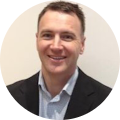
Craig Hexter
Hello / Szia, While working as an expat in Budapest, I was unfortunately diagnosed with a brain tumor following tests and multiple MRI scans. I was referred to The National Institute of Neuroscience (OMIII), specifically, Dr Peter Orbay, Neurosurgeon. The referral came from my Neurologist at First Med Kft, Dr Edina Varga. I would like to specifically point out my upmost thanks for Dr Varga, a very professional, empathetic and friendly partner for me and my family during these times. Dr Varga referred me to Dr Orbay as mentioned. Dr Orbay advised me in January 2023 that I had a primary brain tumour and that he would need to operate and he was confident that he would be able to perform a resection. There are significant risks to brain surgery, from paralasis and death and anything in between. Two weeks later, Dr Orbay performed a total resection without complications. I ended up walking out after just 5 days, 3 days earlier than planned. Experience .... Not speaking Hungarian, and heading for brain surgery in a foreign country, I and my family were very nervous. Dr Orbay changed this for me. Constant text messages, phone calls, nothing was too hard and any question was welcomed. Dr Orbay introduced me to Bence Magyar at the hospital, who became my and my family's best friend during these times as Bence made us feel at home and also spoke fluent English and translated most of what was required. Without Bence though, the experience could have been quite different. Different and more challenging as 99% of the nurses did not speak any English. This is something that I highly recommend the Institute to improve as when Bence was not around (through the nights as example, I had no idea what drugs were being administrated and I could not communicate except for google translate which was still difficult due to medical terms and drug names. To summarise my experience, here are a few bullet points from my side. POSITIVES: - English speaking Surgeon, specifically Dr Peter Orbay! Amazing man and still to this day, being back In Australia I am in contact with. - Other doctors. There was a team of doctors actually responsible for me, and they were all so lovely and spoke great English. - Bence Magyar. Always available for calls, texts, translation, even special car parking for my wife! Let there be more of people like him to ensure other English speaking patients can receive the same care 🙂 IMPROVEMENT SUGGESTIONS - English speaking nurses. If there is always one available 24/7, this would take away the worry of not understanding the drugs being administered through the night or when the doctors are not around. - Food. I can't say the hospital food was great, yet not expected to be. Recovering from Brain surgery it was important that I had the highest quality foods such as fresh fruits, salads, protein etc. Here, my wife brought in lots of home cooked meals. It would be great if there was an option for the hospital to provide better food, but anyway, for this review, get an external to bring you the food you require which is always best anyway, no matter where you are in the world! I am now back in Australia after completing my initial 6 weeks of chemotherapy and radiation treatment. I now focus on my current 6 months of additional chemo and time with my family. I felt very loved and cared for in Budapest. First Med doctors in district 1 were amazing, and my Surgeon Dr Orbay, My Oncologist as well, amazing, really. Thank you Dr Orbay for extending my life and and thank you Bence for holding me and my family's hands through this challenging time. Craig - 3 years ago
Read moreRead less
×
Craig Hexter
3 years ago
Hello / Szia, While working as an expat in Budapest, I was unfortunately diagnosed with a brain tumor following tests and multiple MRI scans. I was referred to The National Institute of Neuroscience (OMIII), specifically, Dr Peter Orbay, Neurosurgeon. The referral came from my Neurologist at First Med Kft, Dr Edina Varga. I would like to specifically point out my upmost thanks for Dr Varga, a very professional, empathetic and friendly partner for me and my family during these times. Dr Varga referred me to Dr Orbay as mentioned. Dr Orbay advised me in January 2023 that I had a primary brain tumour and that he would need to operate and he was confident that he would be able to perform a resection. There are significant risks to brain surgery, from paralasis and death and anything in between. Two weeks later, Dr Orbay performed a total resection without complications. I ended up walking out after just 5 days, 3 days earlier than planned. Experience .... Not speaking Hungarian, and heading for brain surgery in a foreign country, I and my family were very nervous. Dr Orbay changed this for me. Constant text messages, phone calls, nothing was too hard and any question was welcomed. Dr Orbay introduced me to Bence Magyar at the hospital, who became my and my family's best friend during these times as Bence made us feel at home and also spoke fluent English and translated most of what was required. Without Bence though, the experience could have been quite different. Different and more challenging as 99% of the nurses did not speak any English. This is something that I highly recommend the Institute to improve as when Bence was not around (through the nights as example, I had no idea what drugs were being administrated and I could not communicate except for google translate which was still difficult due to medical terms and drug names. To summarise my experience, here are a few bullet points from my side. POSITIVES: - English speaking Surgeon, specifically Dr Peter Orbay! Amazing man and still to this day, being back In Australia I am in contact with. - Other doctors. There was a team of doctors actually responsible for me, and they were all so lovely and spoke great English. - Bence Magyar. Always available for calls, texts, translation, even special car parking for my wife! Let there be more of people like him to ensure other English speaking patients can receive the same care 🙂 IMPROVEMENT SUGGESTIONS - English speaking nurses. If there is always one available 24/7, this would take away the worry of not understanding the drugs being administered through the night or when the doctors are not around. - Food. I can't say the hospital food was great, yet not expected to be. Recovering from Brain surgery it was important that I had the highest quality foods such as fresh fruits, salads, protein etc. Here, my wife brought in lots of home cooked meals. It would be great if there was an option for the hospital to provide better food, but anyway, for this review, get an external to bring you the food you require which is always best anyway, no matter where you are in the world! I am now back in Australia after completing my initial 6 weeks of chemotherapy and radiation treatment. I now focus on my current 6 months of additional chemo and time with my family. I felt very loved and cared for in Budapest. First Med doctors in district 1 were amazing, and my Surgeon Dr Orbay, My Oncologist as well, amazing, really. Thank you Dr Orbay for extending my life and and thank you Bence for holding me and my family's hands through this challenging time. Craig
Written patient accounts
These testimonials describe individual experiences of hospital admission, clinical teams, treatment pathways, and care environments. They should not be interpreted as a guarantee of outcome, suitability, or the experience of another patient.
“Two weeks ago, I was admitted to the General Neurology Department led by Prof. Dr. Anita Kamondi, Chief Physician. Upon arrival at the emergency room, I could barely walk even with the help of two canes, and standing was also a challenge. After two weeks, I left the hospital walking without any aid, descending from the second floor on foot, feeling almost completely transformed. Two truly extraordinary doctors, Dr. Anikó Papp, Assistant Professor, and Dr. Lőrinc Velkey, supported, accompanied, and treated me during my stay.
Ildikó NagyGeneral Neurology
“I was admitted to the Neurointerventional Department for a planned, preventive aneurysm surgery. I have nothing but praise and gratitude for the organized way everything was handled during the pre-scheduled examinations, and later during the surgery at the hospital. I commend the strict adherence to the patient visitation policy, the cleanliness of the hospital, the comfort of the beds, the smiles, and the empathetic, encouraging words.
Susanne BajorBrain Aneurysm
“I stayed at the OMIII Neurointerventional Department due to a dural fistula surgery. I would like to express my gratitude and thanks to the hospital staff. Right from my arrival, I was impressed by the cleanliness and orderliness of the ward and the department, as well as the high standard of the rooms. I have never received medical care in such a well-maintained and quality environment before.
Judith BagiDural Fistula Surgery
Preparing a complex neurological or neurosurgical case?
Submit the information currently available. Healwise can review whether further documents are needed and explain the next appropriate coordination step.
Individual experiences and clinical outcomes vary. Healwise does not diagnose, determine treatment suitability, or provide emergency medical care.