

PARKINSON’S DISEASE • SPECIALIST SECOND OPINION

Parkinson’s DBS Second Opinion with Prof. Loránd Erőss

A structured medical-record review, English-language online consultation and written next-step summary for advanced Parkinson’s disease, disabling tremor, dystonia and selected movement-disorder cases where DBS or another advanced treatment pathway is being considered. Questions about DBS candidacy, DBS versus MRgFUS, or problems with an existing DBS system can also be screened where relevant.
Request Free Case ScreeningSee What Is Included

Free administrative screening • fixed €390 specialist-review package • no payment before the case is accepted for specialist review

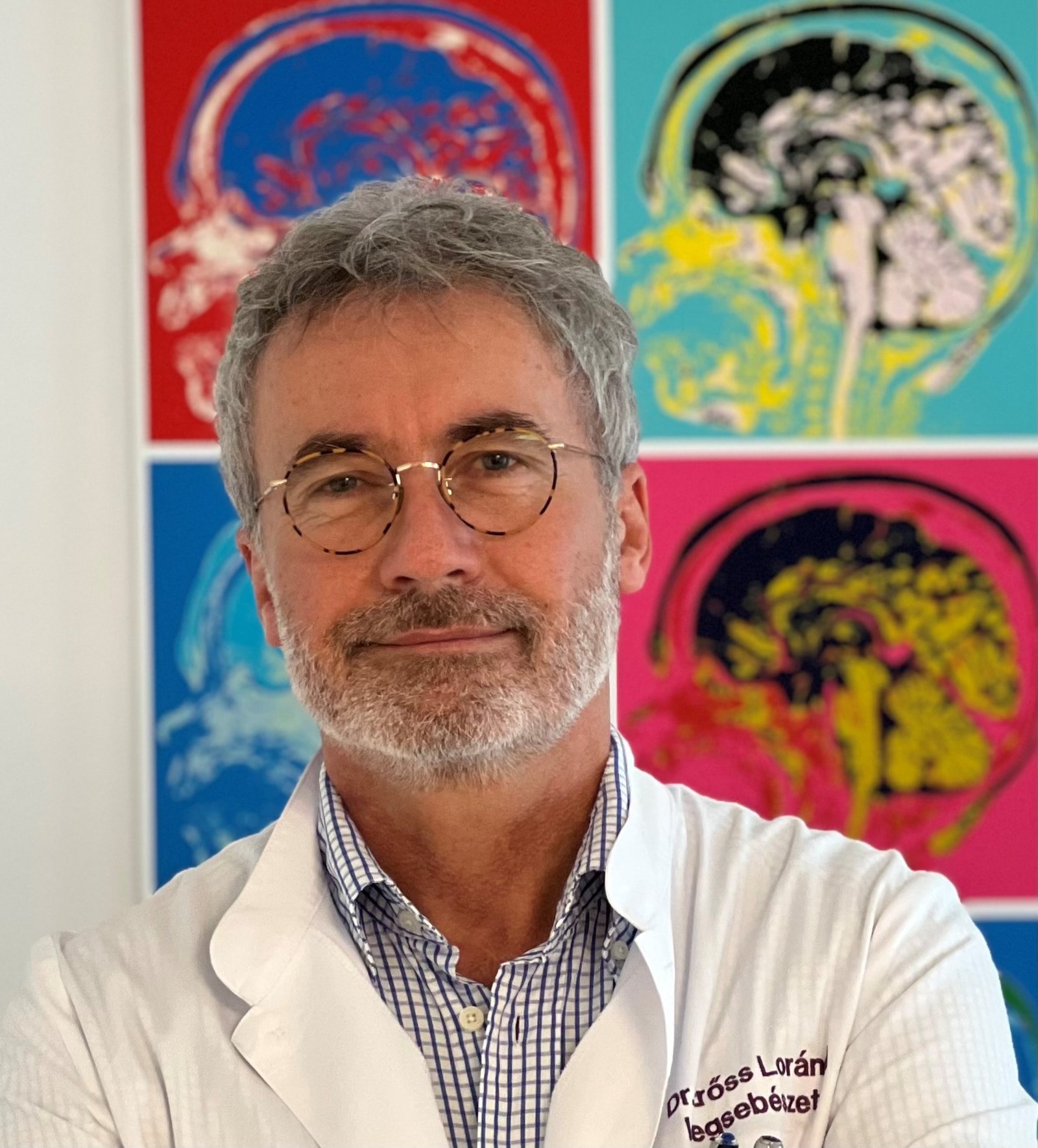
Professor Loránd Erőss, Director of the Department of Neurosurgery and Neurointervention at Semmelweis University

Prof. Loránd Erőss, MD, PhD, FIPP

Director, Department of Neurosurgery and Neurointervention
Semmelweis University

CONSULTATION

30–60 minutes online
English-language appointment

DELIVERABLE

Written clinical summary
Specialist-reviewed next steps

APPOINTMENT TIMING

Usually offered within 1 week
After complete records, consent and payment

CASE COORDINATION

Secure case preparation
Records, imaging and follow-up

Looking for a broader clinical overview of Parkinson’s disease, DBS and MRgFUS? Read the Parkinson’s clinical pathway guide.

A specialist-led review for an important treatment decision

The purpose of this service is not to direct every patient toward surgery. It is to help patients, families and referring physicians understand whether a formal DBS or other advanced movement-disorder assessment appears reasonable, what information is still missing and what the next clinical step should be.

DBS candidacy question

For patients with disabling motor fluctuations, dyskinesia, tremor, dystonia or medication-related limitations despite specialist treatment, where the value and feasibility of further DBS assessment need clarification.

Second opinion before treatment

For patients who have received conflicting recommendations, have previously been declined, or want an additional specialist review before committing to further tests, surgery or treatment abroad.

DBS, MRgFUS or another path?

The review can identify whether DBS work-up, a separate MRgFUS evaluation, medication or infusion review, rehabilitation, additional diagnostics or continued local care deserves priority.

Already have a DBS system?

For patients with an implanted DBS system who need specialist review of loss of benefit, programming history, battery or hardware concerns, prior revision, or the need for further in-person DBS care.

Professor Loránd Erőss, functional neurosurgery and neuromodulation specialist

YOUR REVIEWING SPECIALIST

Prof. Loránd Erőss, MD, PhD, FIPP

Director, Department of Neurosurgery and Neurointervention, Semmelweis University

Professor Erőss is a board-certified neurologist and neurosurgeon whose clinical work focuses on functional neurosurgery and neuromodulation. He has led functional neurosurgery programmes for more than 20 years and established Hungary’s first dedicated Functional Neurosurgery and Neuromodulation Department in 2010.

  • Specialist focus on Parkinson’s disease, movement disorders, deep brain stimulation, epilepsy surgery and invasive neuromodulation.
  • International DBS training and professional experience in major European functional-neurosurgery centres.
  • Director of the Semmelweis University clinical department responsible for adult neurosurgery, neurointervention, comprehensive epilepsy care and neuromodulation.

The specialist provides the independent clinical review. Healwise prepares the case, coordinates the consultation and supports any agreed next steps. Institutional affiliation is provided for professional identification and does not replace the receiving institution’s own admission and treatment decisions.

What the €390 specialist-review package includes

Payment is requested only after Healwise has completed the free administrative screening and confirmed that the case can be prepared for meaningful specialist review.

Included

  • Administrative suitability and document-completeness screening.
  • Healwise preparation of a structured English-language case summary.
  • Specialist review of the submitted medical records and relevant imaging.
  • A 30–60 minute English-language online consultation with Prof. Loránd Erőss.
  • A written consultation summary setting out the specialist’s observations and recommended next steps.
  • One short written clarification within seven calendar days of receiving the summary, provided that it relates to the same records and clinical question.
  • Healwise guidance on further diagnostics, in-person evaluation or treatment coordination if recommended.

Fixed package fee

€390

No charge is made if the case is not accepted after the administrative screening and before specialist review begins.

Typical timing: consultation normally offered within one week after the required records, consent and payment are complete.

New records, a new clinical question, additional specialist opinions, further consultations, diagnostics, translation, in-person care, treatment and travel are outside this package and are quoted separately where relevant.

Request Free Case Screening

DBS and MRgFUS are different pathways

Neither option is automatically better. The relevant question is which pathway, if any, matches the diagnosis, dominant symptoms, levodopa response, risk profile, goals and follow-up capacity.

Deep brain stimulation (DBS)

  • Uses surgically implanted leads and a programmable pulse generator.
  • Stimulation can be adjusted over time as symptoms and medication needs change.
  • May be considered in selected advanced Parkinson’s disease cases not adequately controlled by best medical therapy.
  • Candidacy usually requires diagnostic confidence, assessment of levodopa-responsive symptoms, cognition and mood, general surgical risk and realistic treatment goals.
  • Requires access to ongoing programming, medication review, device monitoring and local follow-up.

MR-guided focused ultrasound (MRgFUS)

  • Uses MRI guidance and focused ultrasound to create a targeted permanent lesion without implanted hardware.
  • It is not programmable or reversible after the lesion has been created.
  • Approved indications and treatment scope vary by country, device, target and treating centre.
  • A separate MRgFUS evaluation may need to address symptom dominance, laterality, gait and balance, cognition, MRI eligibility, CT-based skull assessment and lesioning risk.
  • Long-term neurological and rehabilitation follow-up remains important.

Important: MRgFUS is not simply a non-invasive replacement for DBS. This service can help determine whether a dedicated MRgFUS assessment should be pursued, but it does not promise MRgFUS eligibility or treatment.

Other movement disorders and existing DBS systems

The same specialist-review pathway can also screen selected tremor, dystonia and other movement-disorder cases where DBS or another advanced treatment pathway is under consideration. For patients who already have a DBS system, the review can also help clarify whether further programming, hardware assessment, battery or generator replacement, revision, or another in-person DBS step should be pursued.

Selected movement-disorder cases

  • Disabling essential tremor or other tremor syndromes where a procedural option is being considered.
  • Dystonia where DBS candidacy, target-centre referral or the next advanced-therapy step needs clarification.
  • Complex or uncertain movement-disorder cases where the patient or referring physician needs specialist review before travelling for further assessment or treatment.

Already implanted with DBS?

  • Loss or reduction of previously achieved benefit.
  • Review of current and previous programming settings and stimulation-related side effects.
  • Battery or pulse-generator replacement questions, hardware concerns or previous revision history.
  • Assessment of whether in-person programming, device evaluation, revision or another specialist DBS pathway should be arranged.

Important: the €390 remote package is a specialist review, not DBS programming or device treatment. If in-person programming, implantation, replacement, revision or other hospital care is recommended and available, Healwise can coordinate that pathway separately following clinical assessment and individual quotation.

Documents usually needed

Submit what is already available. Healwise will identify material gaps before payment and specialist review. The most important inputs are the current neurological status, medication and levodopa response, recent MRI information and the patient’s present treatment goal.

Current neurological status and symptom profile

  • Recent neurology or movement disorder report, including the current diagnosis and neurological status.
  • Main motor symptoms: tremor, rigidity, slowness, dystonia, freezing, gait difficulty, falls, dyskinesia and wearing-off.
  • Relevant non-motor symptoms: cognition, mood, hallucinations, sleep, impulse control, autonomic symptoms, swallowing and speech.
  • MDS-UPDRS or UPDRS scores, Hoehn and Yahr stage and other clinical scales, if available.
  • Short videos showing tremor, walking, freezing, dyskinesia or on/off differences, if already available and transferred through the secure route requested by Healwise.

Medication schedule and levodopa response

  • Exact current medication schedule with drug name, dose, formulation and timing.
  • Formal levodopa challenge or levodopa-test results where available.
  • If no formal test is available: a detailed account of which symptoms improve after levodopa, how long the benefit lasts and which symptoms do not respond.
  • On/off diary or notes showing off-time, dyskinesia, dose failures, delayed-on and night or early-morning symptoms.
  • Previously tried treatments and the reason each was stopped or changed.

Imaging and advanced therapy work-up

  • Recent brain MRI report and DICOM images where available.
  • DaT-SPECT or other nuclear medicine reports if performed.
  • Neuropsychological assessment, cognitive screening and relevant psychiatric history if advanced therapy is being considered.
  • Medical history relevant to procedure risk, including anticoagulation, cardiac disease, infection risk, diabetes, previous brain surgery, pacemaker or other implanted devices.
  • Any previous DBS, MRgFUS or advanced-therapy assessment.

Existing DBS records, if a system is already implanted

  • Operative report, target, side, lead model, pulse-generator model and implantation or battery-change dates.
  • Current and previous programming settings, if available.
  • Programming history: benefit, stimulation side effects, loss of effect, battery or hardware concerns and previous revisions.
  • Medication schedule before and after DBS and the current review goal.

Function, goals and follow-up capacity

  • Current independence, caregiver support, work and driving status, falls and daily activity limitations.
  • Physiotherapy, occupational therapy, speech or swallowing assessments where relevant.
  • Priorities such as reducing off-time, dyskinesia or tremor; improving function; or reducing medication burden.
  • Available local follow-up: neurologist, movement disorder specialist, DBS programmer, rehabilitation provider and family physician.

How the specialist second-opinion pathway works

One clinical question, one accountable review pathway and a clear handover.

1

Submit a short review request

Tell us the diagnosis, main symptoms, treatment question, country and available records. Full medical files can follow through the secure upload route.
2

Free administrative screening

Healwise checks whether the request fits the service and identifies the records normally needed. No fee is charged at this stage.
3

Confirm scope, consent and fixed fee

Once the file is suitable, Healwise confirms the clinical question, package scope, €390 fee and data-transfer process before specialist work begins.
4

Structured case preparation

We organize the diagnosis, symptom timeline, medication response, levodopa information, imaging, daily function, prior assessments and patient goals into a concise English review file.
5

Specialist review and online consultation

Prof. Loránd Erőss reviews the submitted case and conducts a 30–60 minute English-language online consultation, normally within one week after the complete file and payment are received.
6

Written summary and clarification

The patient receives an approved written consultation summary. One short written clarification relating to the same records and question is included for seven calendar days.
7

Further pathway coordination, if needed

If additional testing, multidisciplinary evaluation, in-person consultation or treatment is recommended, Healwise can define and quote the next coordination phase separately.

What the specialist may clarify

Diagnostic confidence and levodopa-responsive symptoms

The review can consider whether the reported clinical pattern is consistent with Parkinson’s disease, whether there are red flags for atypical parkinsonism, which disabling symptoms appear levodopa-responsive and which problems are less likely to improve with DBS.

Whether formal DBS assessment should continue

The specialist may identify whether the submitted information supports proceeding to formal multidisciplinary DBS work-up, whether further neurological, neuropsychological, imaging or general medical assessment is needed, or whether another treatment direction should be considered first.

The main treatment goal and realistic limitations

The dominant problem may be off-time, dyskinesia, medication-refractory tremor, dystonia, medication side effects, gait, speech, cognition or caregiver burden. The review aims to distinguish potentially realistic procedural goals from symptoms that may not improve with surgery.

Whether an MRgFUS pathway deserves separate assessment

For tremor-dominant or otherwise uncertain cases, the consultation can clarify whether a dedicated focused-ultrasound evaluation should be sought. Final MRgFUS candidacy requires assessment by an appropriate treating centre and may require additional imaging and skull-density evaluation.

Selected tremor, dystonia and other movement-disorder questions

For selected non-Parkinson movement-disorder cases, the review can clarify whether a DBS-oriented work-up or another advanced treatment pathway appears reasonable, what specialist assessment is still missing and whether referral to an appropriate treating centre should be considered.

Problems with an existing DBS system

For patients who already have DBS, the specialist can review the reported clinical course, programming history, stimulation-related side effects, loss of benefit, battery or hardware concerns and previous revisions, and advise whether further in-person programming, device assessment, replacement or revision should be pursued.

Follow-up requirements after advanced treatment

DBS requires repeated programming, neurological monitoring and device follow-up. Any international pathway should also account for medication management, rehabilitation, local clinical support and escalation planning.

When local urgent assessment comes first

This service is not emergency care. Seek urgent local medical help for sudden severe worsening, new weakness, collapse, severe confusion, psychosis or suicidal thoughts, swallowing or aspiration risk, dehydration, serious falls, inability to take Parkinson’s medication, or suspected DBS wound, infection, hardware or sudden stimulation problems.

How Healwise adds value

  • Turns scattered records into a focused specialist-review file.
  • Clarifies missing information before specialist time is used.
  • Coordinates consent, secure transfer, scheduling, consultation and written handover.
  • Provides one accountable contact for the patient, family and referring physician.
  • If an in-person pathway is recommended, supports appointments, document transfer, admission and travel preparation, and follow-up handover.

Clinical role boundaries

Healwise does not diagnose Parkinson’s disease or other movement disorders, prescribe or adjust medication, determine final DBS or MRgFUS eligibility, select a surgical target, program an implanted device or provide treatment as part of the €390 remote-review package.

The remote review is a specialist second opinion based on the records and consultation available at that time. Final candidacy, procedure selection, programming changes, device replacement or revision, expected benefit, risk assessment, hospital admission and treatment decisions may require multidisciplinary and in-person assessment by the receiving clinical team. If such in-person care is recommended and available, Healwise can coordinate it separately.

Frequently asked questions

Is this a formal final DBS candidacy assessment?

No. It is a specialist second opinion that can clarify whether formal DBS assessment appears reasonable and what further work-up may be needed. Final candidacy normally requires multidisciplinary review and may require an in-person neurological examination, formal levodopa challenge, neuropsychological testing, imaging and general medical assessment.

Does Prof. Erőss also assess MRgFUS eligibility?

MRgFUS is not the primary focus of this service. For relevant tremor or movement-disorder cases, the review can consider whether a dedicated MRgFUS assessment should be pursued. Final eligibility and treatment must be determined by an appropriate MRgFUS centre.

Can you review tremor, dystonia or another movement disorder?

Selected non-Parkinson movement-disorder cases can be screened when the main question concerns DBS, MRgFUS or another advanced treatment pathway. Suitability depends on the diagnosis, symptoms, available records and the specific decision that needs clarification.

Can you help if I already have a DBS system?

Yes. The remote review can consider programming history, loss of benefit, stimulation side effects, battery or hardware concerns and previous revisions. It does not include device programming or treatment. If in-person programming, replacement, revision or other specialist DBS care is recommended and available, Healwise can coordinate that separately.

What happens if some records are missing?

Submit the records you already have. Healwise completes a free administrative screening and identifies important gaps before payment and specialist review. A formal levodopa test is helpful, but if it is unavailable, detailed medication-response information can still be submitted for screening.

How quickly can the consultation take place?

After the required records, consent and payment are complete, the English-language online consultation is normally offered within one week. Unusually complex files or scheduling constraints may require additional time, which Healwise will communicate before payment.

What follow-up is included?

One short written clarification relating to the same records and clinical question is included for seven calendar days after the written summary is delivered. New records, a new clinical question or another online consultation require a separate scope and fee.

What happens if surgery or further assessment is recommended?

There is no obligation to proceed. If the patient wishes to continue, Healwise can coordinate further diagnostics, multidisciplinary assessment, an in-person appointment, treatment planning and international logistics. The scope and any additional fees are confirmed separately before work begins.

Will I still need follow-up in my home country?

Usually yes. DBS requires long-term programming and device monitoring, while MRgFUS and other advanced therapies require neurological monitoring and may require rehabilitation. Local follow-up capacity should be clarified before treatment abroad is organized.

MRgFUS for Tremor

Read more about the focused-ultrasound pathway for selected tremor cases.

View MRgFUS pathway

Clinical Pathways

Explore other coordinated specialist pathways for complex international cases.

View clinical pathways

For Referring Physicians

Submit a structured case or discuss the records needed for named-specialist review.

Refer a patient

Request free DBS & movement-disorder case screening

Tell us briefly about the diagnosis, main symptoms, current treatment question and any previous advanced-therapy assessment or DBS treatment. Healwise normally responds within two working days to confirm whether the €390 specialist-review package appears suitable and which records are needed. No payment is required at this stage.

Please enable JavaScript in your browser to complete this form.

Patient and Contact Information

Who is completing this form?
Please include the international country code.

Parkinson's and Advanced Therapy Screening

Approximate age is acceptable. This pathway is intended for adult patients.
Which clinical situation best describes the patient?
What is the main question for specialist review?
How clearly do the patient's symptoms improve after levodopa or Parkinson's medication?
A formal levodopa test is not required for this initial screening.
Please briefly describe the main symptoms, how long they have been present, current Parkinson's medications, functional difficulties, and the decision that needs to be made. A few sentences are enough.
Which clinical records are currently available?
Select all that apply. Documents do not need to be uploaded at this stage.

Consent

Authorization and data processing