

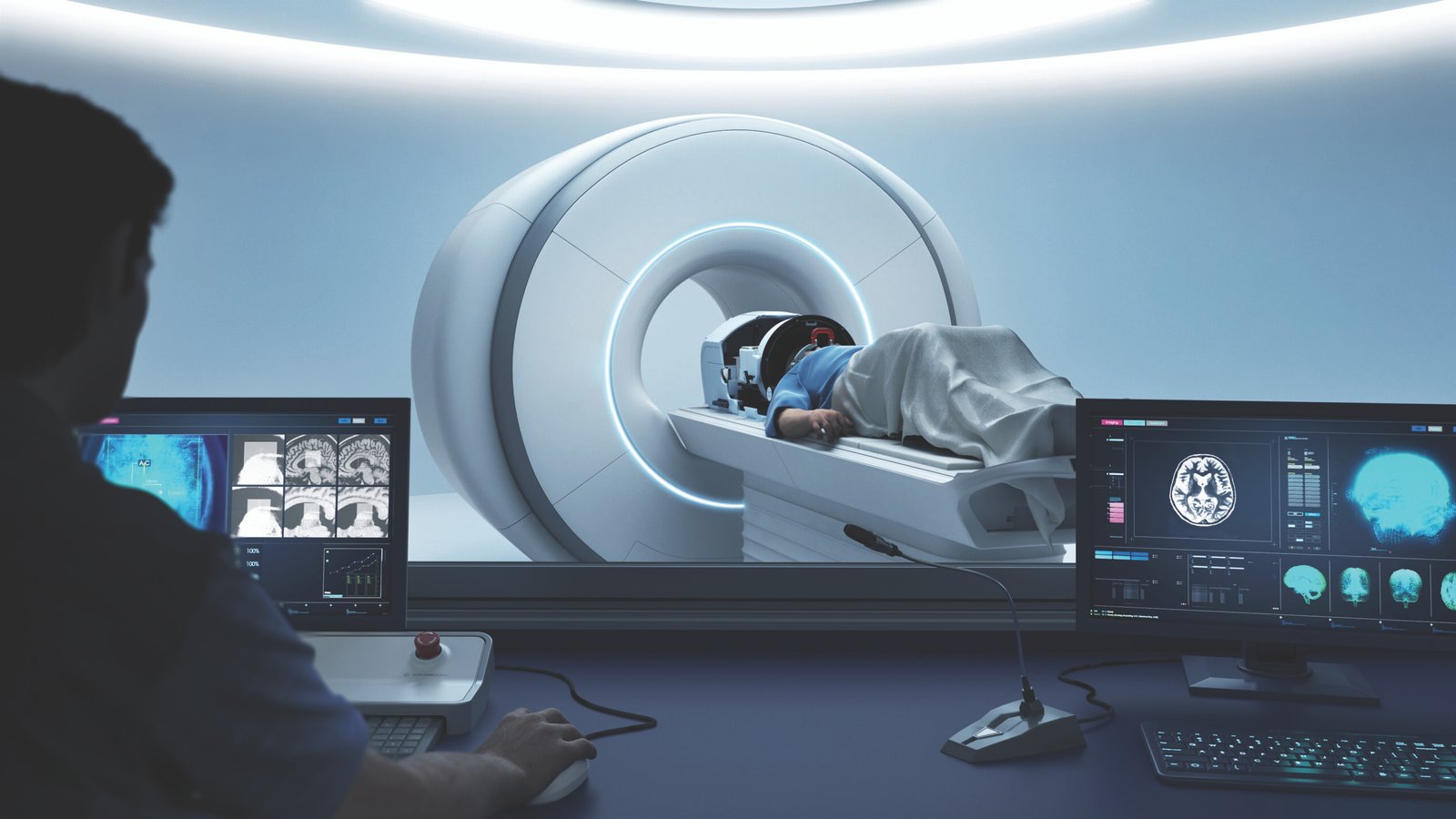
MRgFUS for Tremor: What to Know Before Specialist Review
Magnetic resonance-guided focused ultrasound (MRgFUS) is a highly specialized functional neurosurgery technology used in selected patients with medication-refractory tremor. It is often described as “incisionless” because it does not require opening the skull or implanting hardware. However, this does not mean it is a simple screening product, a general tremor cure, or a treatment that is appropriate for every patient with shaking hands.
For patients and families considering MRgFUS, the most important step is not “booking a treatment.” It is a structured eligibility review: confirming the tremor diagnosis, documenting medication history, reviewing MRI and CT feasibility, comparing MRgFUS with alternatives such as deep brain stimulation (DBS), and understanding the limitations of an irreversible lesioning procedure.
Healwise supports patients and referring physicians by preparing the case file, clarifying which documents are needed, and coordinating specialist review where appropriate. Healwise does not diagnose tremor, determine eligibility, recommend MRgFUS, or provide medical treatment. Eligibility and treatment decisions are made by licensed movement disorder and functional neurosurgery specialists.
MRgFUS is a specialized technology, not a generic tremor treatment
In movement disorders, MRgFUS usually refers to MRI-guided focused ultrasound lesioning performed with a dedicated neurosurgical platform. In practice, current patient-facing discussion of this market is closely linked to dedicated systems such as Insightec’s Exablate Neuro and by the regulatory indications granted in different countries. The FDA’s original Exablate Neuro approval describes unilateral thalamotomy for idiopathic essential tremor with medication-refractory tremor in patients aged at least 22, where the ventral intermediate nucleus target is identifiable and accessible for thermal ablation.
This matters for positioning. MRgFUS should not be presented like a competitive consumer service where providers compete mostly on speed, price, or convenience. It is a physician-led, technology-specific intervention with strict patient selection, device availability constraints, center-specific protocols, and country-specific regulatory indications.
What MRgFUS does — and what it does not do
MRgFUS focuses ultrasound energy through the skull to a small target in the brain, most commonly the ventral intermediate nucleus of the thalamus for tremor. MRI is used to guide targeting and monitor temperature during the procedure. Low-energy sonications may be used first so the treating team can assess tremor response and potential side effects before creating a permanent therapeutic lesion.
The procedure may reduce tremor in the treated side of the body, often the dominant hand. It does not treat the underlying disease process. Essential tremor may continue to progress, Parkinson’s disease may progress in other motor and non-motor ways, and symptoms outside the treated tremor circuit may require separate management.
MRgFUS is also not adjustable after treatment. This is one of the central differences from DBS. DBS involves implanted hardware that can be programmed, adjusted, turned off, revised, or sometimes removed. MRgFUS creates a lesion. That can be attractive for patients who wish to avoid implants, but it also means that careful selection and informed consent are especially important.
When MRgFUS may be considered
MRgFUS may be considered for carefully selected patients whose main disabling symptom is tremor and whose symptoms have not responded adequately to appropriate medication. The most typical clinical scenarios include:
- Medication-refractory essential tremor, especially when tremor affects eating, drinking, writing, hygiene, work, or social functioning.
- Tremor-dominant Parkinson’s disease, in selected cases where tremor is the main target symptom and a specialist team considers lesioning appropriate.
- Patients unsuitable for, or strongly opposed to, implanted hardware, where DBS may be less acceptable or less appropriate.
- Predominantly one-sided disabling tremor, because treatment is usually staged and unilateral, even when both sides may eventually be considered.
These are not self-diagnosis criteria. They are reasons why a structured movement-disorder review may be appropriate.
When MRgFUS may not be the right pathway
MRgFUS may be inappropriate or less suitable when the tremor diagnosis is uncertain, when medication trials have not been optimized, when the patient’s main impairment is not tremor, or when imaging and safety factors make treatment technically unsuitable.
Common reasons for caution include:
- Unclear diagnosis: essential tremor, Parkinsonian tremor, dystonic tremor, cerebellar tremor, medication-induced tremor, functional tremor, and other causes may require different pathways.
- Mild tremor: if tremor does not meaningfully impair daily function, a lesioning procedure may not be justified.
- Poor medication documentation: many centers expect evidence that standard medication options were tried, not tolerated, or insufficiently effective.
- Major balance, gait, sensory, speech, or swallowing issues: these may increase the importance of weighing potential side effects carefully.
- MRI incompatibility: certain implants, devices, metal fragments, severe claustrophobia, or inability to lie still may prevent treatment.
- Skull feasibility issues: CT-based assessment of skull characteristics may show that ultrasound transmission is not adequate.
- Bilateral symptoms requiring broad control: DBS or other strategies may be more appropriate in some patients, especially when bilateral adjustability is important.
Documents usually needed for an MRgFUS eligibility review
A useful MRgFUS review is usually impossible from a short message such as “I have tremor.” The case needs to be documented in a way that allows a movement disorder and functional neurosurgery team to understand diagnosis, severity, prior treatment, imaging feasibility, and realistic goals.
Typical documents and information include:
- Confirmed diagnosis from a neurologist or movement disorder specialist, if available.
- Duration and pattern of tremor: rest tremor, action tremor, postural tremor, head/voice tremor, dominant hand involvement.
- Medication history: propranolol, primidone, levodopa, dopamine agonists, or other therapies depending on diagnosis.
- Medication response and side effects.
- Short videos showing tremor during typical tasks such as writing, drinking, holding a spoon, drawing a spiral, or reaching.
- Neurological examination notes, tremor rating scale results, or movement-disorder clinic letters.
- Brain MRI, if available.
- Planning CT or CT skull-density assessment, if already performed.
- List of implants, devices, anticoagulants, major comorbidities, prior neurosurgery, and MRI-related concerns.
- Patient goals: which hand, which activities, and what level of improvement would be meaningful.
How the MRgFUS review pathway usually branches
MRgFUS evaluation is not a single yes/no checkbox. A well-run pathway usually has several decision points.
1. Diagnosis clarification
The first question is whether the tremor syndrome is truly essential tremor, tremor-dominant Parkinson’s disease, or another movement disorder. This can require review by a movement disorder neurologist. In Parkinson’s disease, the team may also need to understand levodopa response, motor fluctuations, dyskinesias, gait, cognition, mood, and non-motor symptoms, because MRgFUS may address tremor but not the broader Parkinson’s pathway.
2. Medication-refractory status
Most MRgFUS pathways require evidence that reasonable medication options were tried or considered. If medication history is incomplete, the next step may be medication optimization rather than procedural review.
3. Functional impact and goal setting
A specialist team will assess whether tremor is severe enough to justify an irreversible procedure. “I want no tremor” is not the same as a realistic procedural goal. A better review question is: which hand and which daily activities should treatment aim to improve, and what risks would the patient accept?
4. MRgFUS versus DBS
MRgFUS and DBS are not interchangeable. MRgFUS is incisionless and avoids implanted hardware, but creates a lesion that cannot be adjusted. DBS is invasive and requires implanted hardware and long-term programming, but it is adjustable and can often treat both sides. Some patients strongly prefer MRgFUS; others are better served by DBS. That comparison should be made by a specialist team based on the patient’s diagnosis, anatomy, symptoms, risk profile, expectations, and follow-up capacity.
5. Imaging and skull feasibility
Even when the clinical diagnosis fits, treatment may not be technically feasible. CT-based skull assessment is important because ultrasound must pass through the skull and converge at the target. Skull density, prior cranial surgery, scalp or skull factors, and MRI compatibility can all affect eligibility.
6. Side-effect risk and informed consent
Because MRgFUS creates a permanent lesion, consent should be specific and realistic. Patients should understand possible sensory symptoms, gait or balance disturbance, speech or swallowing issues, headache, dizziness, nausea, and the possibility of incomplete response or later tremor recurrence.
Potential benefit and important limitations
MRgFUS may reduce tremor in selected patients. Some patients notice improvement during or soon after the procedure because the treatment team can test tremor response during stepwise sonication before creating the final lesion. The degree of improvement, functional benefit, and durability of benefit vary from patient to patient.
MRgFUS should not be understood as a cure for essential tremor or Parkinson’s disease. It does not stop disease progression, does not treat every tremor type, and does not address all Parkinson’s symptoms. For patients with bilateral tremor, the usual pathway is staged and side-specific rather than treating both sides at once.
Likely benefit depends on diagnosis, symptom pattern, medication history, target selection, imaging feasibility, skull characteristics, baseline gait and balance, and the treating center’s specialist assessment. A careful review should therefore discuss both what MRgFUS may improve and what it is unlikely to improve.
For this reason, patient-facing communication should focus on the specific review question: whether the patient’s tremor syndrome, medication history, imaging profile, skull feasibility, risk factors, and treatment goals make MRgFUS a reasonable option to discuss with a specialist team.
A careful consultation should also compare MRgFUS with other pathways, including medication optimization, DBS, staged bilateral strategies, rehabilitation, or local neurological follow-up. In some cases, the most appropriate next step may be further diagnostic clarification rather than procedural planning.
Known risks and limitations
MRgFUS avoids incision, implanted hardware, and many risks associated with open or implanted neurosurgery. But it is not risk-free. Reported adverse events include imbalance or gait disturbance, numbness or tingling, headache or head pain, dizziness, taste disturbance, slurred speech, fatigue, vomiting, and less common neurological deficits.
In the pivotal randomized trial for essential tremor, gait disturbance and paresthesias or numbness were reported in a substantial proportion of treated patients, with some persisting at 12 months. Insightec’s patient safety information also emphasizes that patients should discuss risks and benefits with a physician and notes imbalance/gait disturbance, numbness/tingling, and headache/head pain among common adverse events.
For bilateral disease, the staged nature of treatment is especially important. The second side may be considered in selected essential tremor patients after an interval, but bilateral lesioning requires careful attention to speech, swallowing, gait, and balance risks. The fact that staged bilateral treatment is possible does not mean that every patient with bilateral tremor should undergo bilateral MRgFUS.
How Healwise supports MRgFUS case coordination
Healwise’s role is not to promote MRgFUS as a treatment. The role is to help patients and referring physicians prepare a case for appropriate specialist review.
For tremor cases, Healwise can support:
- Structured intake of diagnosis, symptoms, medication history, and patient goals.
- Collection and organization of neurological reports, MRI/CT files, and tremor videos.
- Preparation of a concise case summary for movement disorder and functional neurosurgery review.
- Identification of missing documents before specialist review.
- Coordination of review with an appropriate specialist team where available.
- Clarification of possible pathways: medication optimization, DBS review, MRgFUS review, local follow-up, rehabilitation, or non-procedural management.
- Support with provider communication, travel-related coordination, and follow-up handover if treatment abroad is clinically appropriate.
Healwise does not replace the movement disorder neurologist, functional neurosurgeon, neuroradiologist, or treating center. It helps make the case reviewable.
Questions patients should ask before deciding
- Is my diagnosis essential tremor, Parkinson’s disease, or another tremor syndrome?
- Is tremor truly the symptom that most limits my daily life?
- Have appropriate medications been tried or optimized?
- Would DBS, medication optimization, botulinum toxin, rehabilitation, or another pathway be more appropriate?
- Which side would be treated first, and why?
- What improvement is realistic for my specific tremor pattern?
- What symptoms would MRgFUS not improve?
- What are my personal risks for gait, balance, sensory, speech, or swallowing side effects?
- Does my MRI/CT/skull assessment support treatment feasibility?
- How would follow-up be managed after returning home?
Bottom line
MRgFUS is a specialized and scientifically important technology for selected tremor patients. Its value comes from precision, non-incisional targeting, and a specific role within functional neurosurgery — not from being marketed as an easy cure or universal alternative to DBS.
The right question is not “Can I get MRgFUS?” but:
“Is my tremor diagnosis, medication history, imaging profile, risk tolerance, and treatment goal appropriate for MRgFUS review — or would another movement-disorder pathway be safer or more suitable?”
That is the kind of question a structured case coordination process is designed to help prepare for specialist assessment.
Preparing an MRgFUS review
If you or your referring physician are considering whether MRgFUS may be relevant, the first step is to make the case reviewable. This usually means organizing the diagnosis, medication history, tremor videos, MRI or CT files if available, and a clear description of which daily activities are most affected by tremor.
CTA: Prepare your tremor case for specialist review.
Sources and further reading
- FDA PMA P150038 — Exablate Neuro
- Insightec — Focused Ultrasound for Essential Tremor Treatment and safety information
- NICE HTG474 — Unilateral MRI-guided focused ultrasound thalamotomy for treatment-resistant essential tremor
- NEJM — Randomized Trial of Focused Ultrasound Thalamotomy for Essential Tremor
- JAMA Neurology — Staged Bilateral Focused Ultrasound Thalamotomy in Essential Tremor
This page is for patient education and coordination purposes only. It is not medical advice. Diagnosis, eligibility assessment, procedural recommendation, consent, and treatment are the responsibility of licensed healthcare professionals and the receiving treatment center.
Prepare a Tremor Case for Specialist Review
If you are considering MRgFUS, DBS, or another advanced tremor pathway, Healwise can help organize your medical documents, medication history, tremor videos, imaging files, and key questions before specialist review.
Prepare Your Tremor CaseView Movement Disorders Pathway